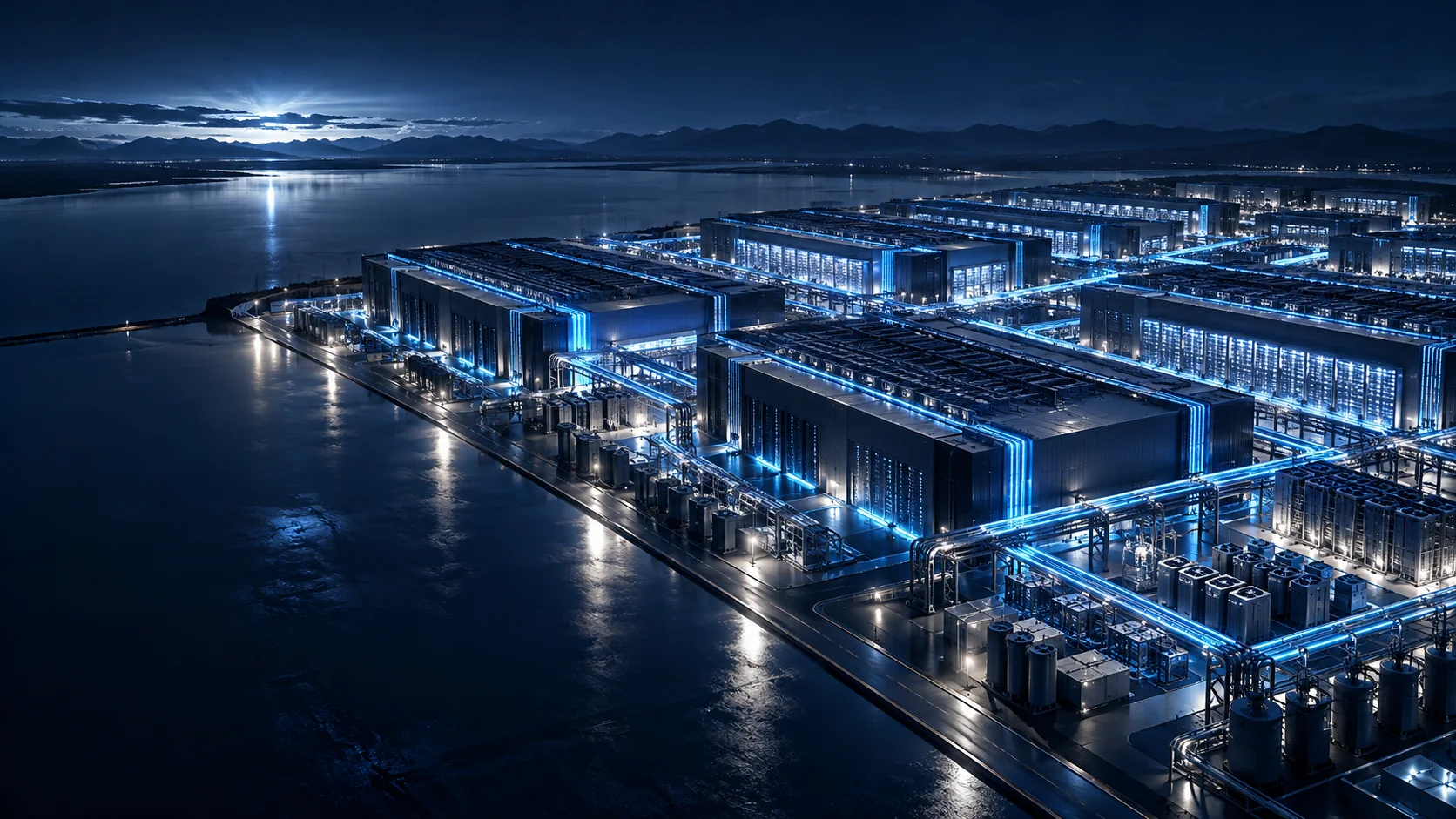
Cooling determines how much compute fits into a building and how reliably that compute can run. It should be underwritten as production equipment.
Air reaches a practical limit
Traditional data centers move large volumes of air through raised floors and server aisles. The method is familiar and serviceable, but dense AI racks concentrate heat faster than air can remove it efficiently. More fans consume more power, occupy space and create uneven thermal conditions.
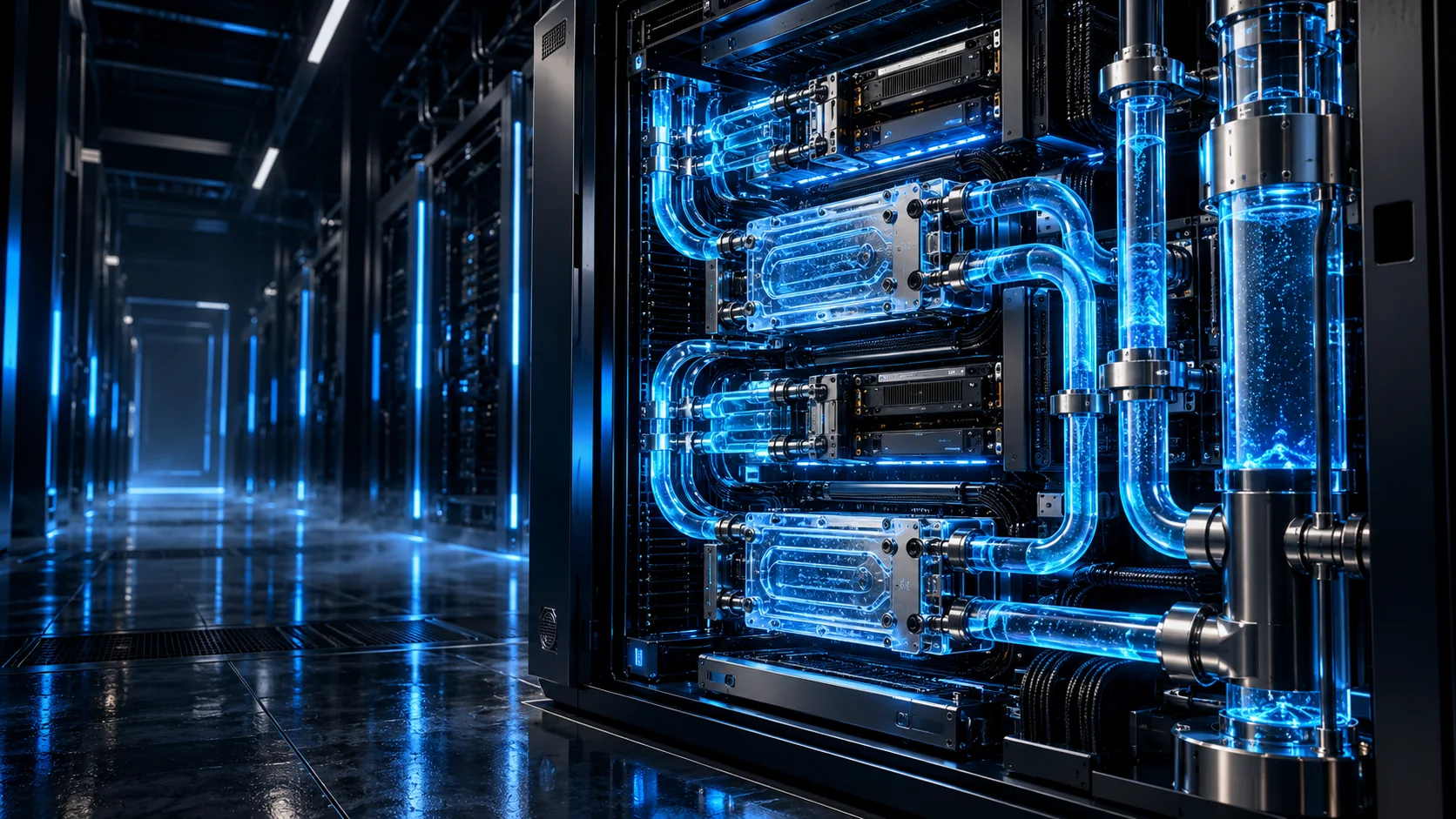
Liquid carries far more heat than air. Direct-to-chip systems place cold plates on the highest-power components and circulate coolant through a controlled loop. The result can support denser racks while reducing the energy spent on fans and mechanical cooling.
The facility and server become one system
Liquid cooling introduces interfaces that must be designed together: facility water, coolant distribution units, manifolds, server loops and monitoring software. A mismatch at any boundary can delay commissioning or reduce redundancy. Standardization is improving, but operators still need clear responsibility for leak detection, water quality and maintenance.
Retrofit economics differ sharply from greenfield construction. Existing buildings may lack floor loading, pipe routes or electrical density for modern AI clusters. A cheap shell can become expensive when every supporting system requires replacement.
Water and heat are strategic outputs
Cooling design also affects local resource use. Closed-loop systems can reduce ongoing water consumption, while warm-water operation can improve heat-reuse potential. The practical value depends on climate, nearby heat demand and the temperature required by the receiving network.
Waste heat is not automatically revenue. It becomes useful only when a nearby customer, connection infrastructure and commercial agreement exist. The same discipline applied to power contracts should be applied to heat-reuse claims.
The underwriting checklist
Cooling capacity should be expressed at the rack profile the customer will actually deploy. Review redundancy, component lead times, service access and the operating plan for partial failures. A design that works at average load may still fail during a hot day, a maintenance event or a sudden workload spike.
- 01
Cooling sets the achievable compute density of a site.
- 02
Evaluate the full loop from facility plant to chip cold plate.
- 03
Treat retrofit complexity, water strategy and serviceability as investment variables.